The Biggest Retirement Mistakes People Make (And How Proper Planning Prevents Them)
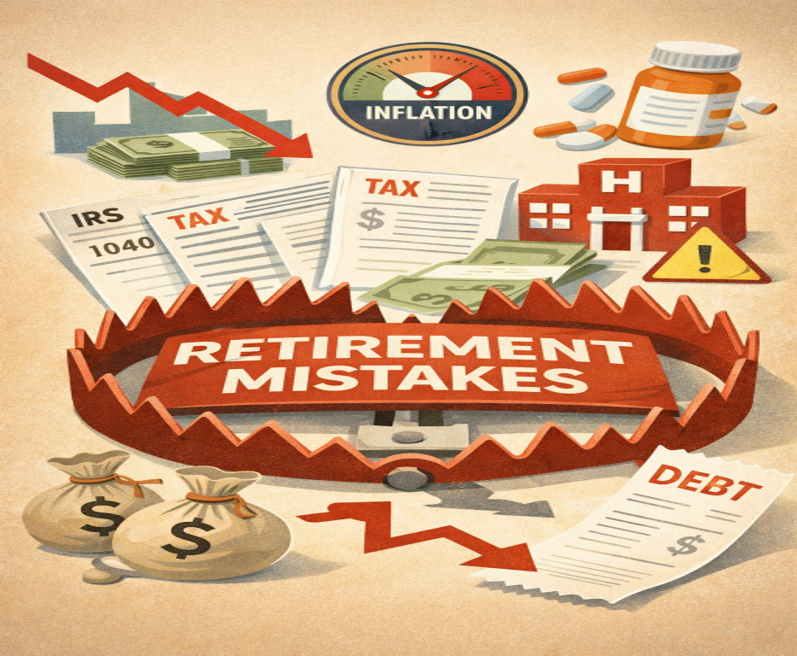
Retirement is supposed to be the reward. Here are the biggest retirement mistakes people make and how proper planning prevents them.
After decades of working, saving, and sacrificing…you finally reach the point where you should be able to relax and enjoy life on your terms.
But here’s the hard truth most people don’t discover until it’s too late:
Retirement mistakes are far more expensive than working-year mistakes.
Why?
Because in retirement, you don’t have the same tools to fix them. You can’t always “work longer.” You can’t always “just earn more.” And market losses combined with withdrawals can permanently damage a plan.
The good news is this: Most retirement mistakes are 100% preventable with proper planning.
Let’s walk through the biggest mistakes people make in retirement—and exactly how they could have been avoided.
Mistake #1: Assuming the Market Will Cooperate
Most people enter retirement with the belief that the market will continue producing “average returns” like it always has.
But retirement changes the rules.
In retirement, you’re no longer just investing…
You’re investing while withdrawing.
And that’s where many plans fall apart.
The Hidden Danger: Sequence of Returns Risk
If the market drops early in retirement and you’re pulling income from the same portfolio, you can permanently damage your ability to recover; even if markets rebound later.
That’s why many retirees experience what feels like an unfair reality:
“The market recovered… but my portfolio never did.”
How Proper Planning Prevents This
The solution is not “be aggressive” or “be conservative.”
The solution is having a plan that does not depend entirely on market performance to fund essential income.
Proper planning uses concepts like:
Income segmentation (safe income bucket + growth bucket)
Principal protection strategies for your essential living expenses
Guaranteed income foundations so your retirement is not hostage to market volatility
Mistake #2: Retiring Without an Actual Income Plan
Many people retire with a savings plan.
But they don’t retire with an income plan.
They know how much they have…
But they don’t know:
how much they can safely spend
which accounts to draw from first
how taxes will impact distributions
how long their money will actually last
Retirement is not about having money.
It’s about having income you can count on.
How Proper Planning Prevents This
Proper planning builds retirement like a paycheck system:
essential expenses covered first
lifestyle expenses funded second
legacy/long-term goals planned last
This creates confidence because the retiree knows:
“My bills are covered no matter what happens.”
Mistake #3: Underestimating Inflation
Inflation is one of the most misunderstood threats in retirement.
Most retirees assume inflation is “a temporary problem.”
But inflation is not temporary in retirement…it’s permanent.
Even low inflation over time quietly destroys purchasing power.
And here’s what makes it worse:
Healthcare inflation often outpaces normal inflation
So retirees don’t just need more money for “things.”
They often need significantly more money for:
prescriptions
medical visits
surgeries
long-term care
premiums and deductibles
How Proper Planning Prevents This
A real retirement plan accounts for inflation from day one by designing:
income sources that have growth potential
structured increases (step-ups)
safe-money income options that don’t collapse during downturns
long-term purchasing power planning
Mistake #4: Not Having a Long-Term Care Strategy
Long-term care is one of the biggest wealth destroyers in retirement.
It’s also one of the most emotional situations a family can go through.
And the biggest problem is this:
Most people assume, “That won’t happen to me.”
But statistically, many retirees will need some form of extended care in later years—and it’s not just nursing homes.
It can include:
assisted living
in-home care
dementia/Alzheimer’s support
mobility assistance and full-time supervision
How Proper Planning Prevents This
Proper planning doesn’t ignore long-term care risk.
It answers the hard question:
If care is needed, where does the money come from?
That may involve:
setting aside a dedicated LTC reserve
hybrid solutions
insurance-based protection
strategies that protect the spouse and the legacy
The goal is simple:
Care should not bankrupt your retirement plan.
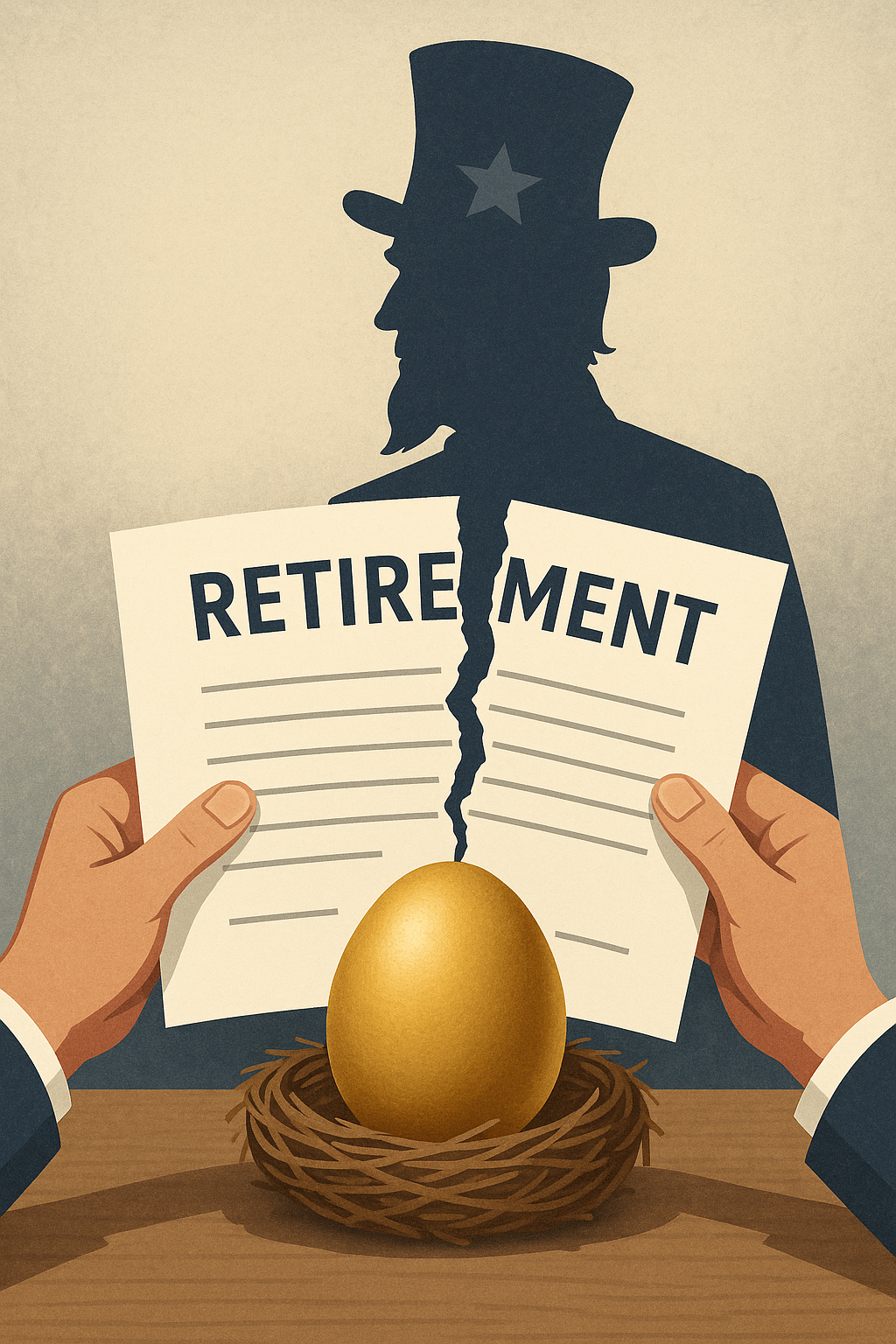
Mistake #5: Paying Too Much to Uncle Sam
Taxes don’t disappear in retirement.
In fact, for many retirees, taxes become more painful because now their income is more limited, yet their tax exposure can increase.
Here are common tax triggers retirees don’t see coming:
Required Minimum Distributions (RMDs)
taxation of Social Security
Medicare premium increases (IRMAA)
higher brackets due to forced withdrawals
loss of deductions
widow/widower tax penalty
And that’s before we even discuss future tax-rate risk.
How Proper Planning Prevents This
Proper planning creates tax diversification, meaning retirement assets are positioned into different “tax buckets”:
taxable
tax-deferred
tax-free
Then you create a distribution strategy so you’re not withdrawing blindly.
This can lead to:
lower lifetime tax burden
less forced taxable income
greater flexibility
more control and peace of mind
Mistake #6: Spending Too Much Early in Retirement
Many retirees spend the most in the first 5–10 years of retirement.
This makes sense. These are the “go-go years”:
travel
new hobbies
gifts to family
renovations
lifestyle upgrades
But spending heavy early can cause serious long-term damage, especially if markets drop during those years.
This combination is devastating:
- High withdrawals
- Early market downturn
- Inflation increasing costs
How Proper Planning Prevents This
Proper planning uses spending guardrails:
essentials are funded by stable income sources
discretionary spending is flexible
distributions adjust based on performance
your lifestyle is protected without recklessness
This allows retirees to enjoy retirement while avoiding financial regret later.
Mistake #7: Carrying Debt Into Retirement
Debt is one of the biggest threats to retirement income.
When people retire with debt, they don’t just have expenses.
They have obligations.
And obligations reduce freedom.
Common retirement debt issues include:
mortgage payments lasting into later years
HELOC balances
credit cards
car notes
co-signing loans for children
business debt
The problem with debt is simple:
Debt forces withdrawals.
And forced withdrawals at the wrong time (especially during market downturns) amplify risk.
How Proper Planning Prevents This
The best retirement plans include a debt strategy:
structured payoff before retirement
refinance planning where appropriate
eliminating high-interest liabilities
cash flow restructuring
Debt-free retirement creates:
lower income needs
reduced stress
increased flexibility
greater stability
Mistake #8: Claiming Social Security Without a Strategy
Social Security claiming is one of the most important decisions retirees make, and yet most people claim based on emotion, not math.
They claim early because:
“I want to get something back”
“I don’t know if I’ll live long enough”
“I’m afraid it’ll run out”
But claiming early reduces benefits for life.
For married couples, a poor claiming strategy can reduce lifetime household income by tens (even hundreds) of thousands.
How Proper Planning Prevents This
Proper planning coordinates claiming decisions with:
spouse strategy
longevity planning
tax impact
income needs
market conditions
Social Security should be integrated into your retirement income plan, not guessed.
Mistake #9: Failing to Update Beneficiaries & Estate Planning
This one sounds boring…
…but it causes some of the biggest problems.
Outdated beneficiaries can send assets to:
the wrong person
an ex-spouse
the wrong children
probate delays
legal disputes
And many retirees don’t have:
power of attorney
healthcare directives
updated wills/trusts
How Proper Planning Prevents This
A proper plan includes annual audits:
beneficiary review
estate documents review
legacy structure review
protection plan for spouse and children
Mistake #10: Planning for Retirement Like It’s a 20-Year Event
Retirement is often not 15–20 years anymore.
It can be:
25 years
30 years
even 35+ years
That means your retirement plan needs to survive:
multiple market cycles
multiple inflation cycles
health changes
tax law changes
How Proper Planning Prevents This
Proper planning stress-tests your retirement plan:
pessimistic market assumptions
inflation pressure
healthcare and LTC events
longevity risk
The goal is not “hope it works.”
The goal is know it works.
The Real Problem: Retirement Risks Stack
The biggest mistake people make is thinking retirement risk happens one at a time.
In reality, retirement risks stack on top of each other.
For example:
market downturn
while taking withdrawals
with inflation rising
plus healthcare costs
plus debt payments
plus tax increases
That’s why retirement is not purely investing.
Retirement is risk management.
Final Thoughts: Retirement Regrets Are Optional
Most people who struggle in retirement don’t struggle because they didn’t save enough.
They struggle because they lacked a plan that accounted for real-world retirement risks.
The biggest retirement mistakes are predictable.
And what’s predictable is preventable.
With proper planning, you can:
protect against market downturns
create stable income
reduce taxes
prepare for inflation and healthcare
eliminate debt pressure
enjoy retirement with confidence
Retirement should not feel uncertain.
It should feel like control.
Disclaimer: The information provided in this article is for general educational purposes only and does not constitute financial, tax, investment, or legal advice. Individual circumstances vary, and you should consult with a licensed professional before making any financial decisions.
This article is for general educational purposes only and is not tax, legal, accounting, or investment advice. Strategies depend on individual circumstances and current law. Please review any strategy with your CPA, tax attorney, or other qualified professional before acting. Insurance products are subject to underwriting and carrier terms.