
Building Blocks
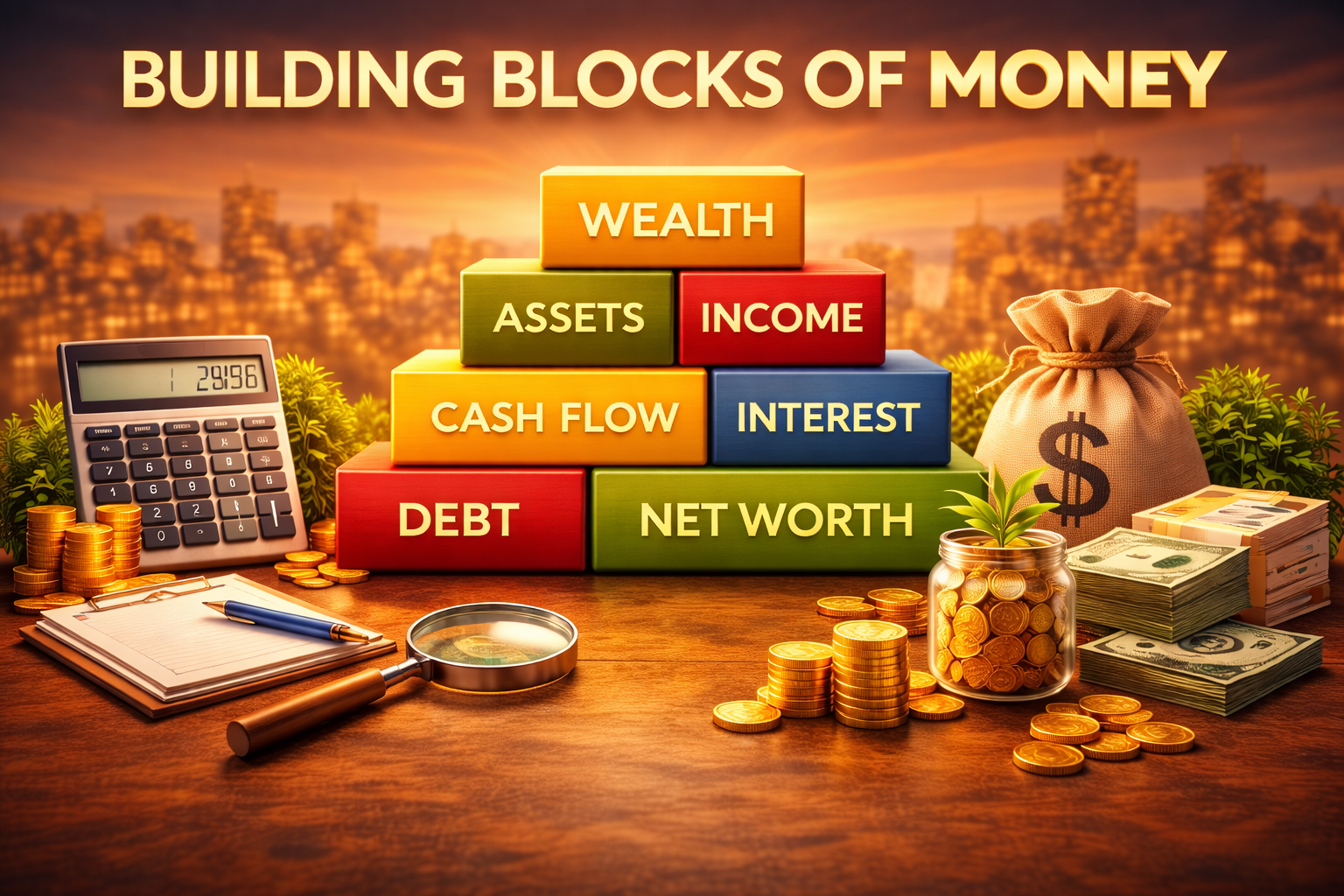
Building Blocks
The Foundation of Financial Confidence
Before wealth can be built, the fundamentals must be understood.
Most people were never taught how money actually works. They were taught how to earn it but not how to manage it, protect it, or grow it. The result is confusion, stress, and financial decisions driven by urgency instead of strategy.
The Building Blocks section of Money 101 exists to correct that.
This page focuses on the core financial principles that form the foundation of every strong financial plan. These are the non-negotiables…the concepts that everything else is built on.
Why the Building Blocks Matter
Without a solid foundation, even high income fails to create wealth.
You can earn more and still struggle.
You can invest and still feel uncertain.
You can save and still fall behind.
The difference isn’t effort, it’s understanding.
When you understand the building blocks of money, you gain:
clarity instead of confusion
control instead of chaos
confidence instead of anxiety
Everything in finance becomes easier when the basics are mastered.
The Core Financial Building Blocks
Cash Flow
Cash flow is the starting point of all financial success. Understanding how money moves in and out of your life determines whether you are building momentum or leaking progress.
Positive cash flow creates options.
Negative cash flow creates pressure.
Debt
Not all debt is the same but unmanaged debt limits freedom.
Learning how debt works, how interest compounds against you, and how to eliminate or restructure debt is essential to reclaiming financial control.
Budgeting
A budget is not restriction…it is direction.
Budgeting allows you to decide where your money goes before it disappears. It turns intention into execution and gives structure to your financial goals.
Saving
Saving creates stability.
Emergency reserves, opportunity funds, and strategic savings protect you from surprises and prepare you for growth. Saving is not the end goal—but it is a critical step in the process.
Investing (Foundational Understanding)
Before choosing investments, you must understand how investing works.
This includes:
risk vs. return
time horizon
compounding
volatility
Education always comes before execution.
Money Mindset
Your beliefs about money influence every financial decision you make.
Mindset determines:
how you earn
how you spend
how you save
how you invest
Wealth is built externally only after it is built internally.
How This Section Fits Into Money 101
Think of Money 101 as the framework and the Building Blocks as the foundation.
This section prepares you for:
better money management
stronger investing decisions
healthier financial habits
long-term wealth creation
Without strong building blocks, advanced strategies collapse under pressure.
The Goal of the Building Blocks
The goal is not complexity.
The goal is clarity.
When the fundamentals are understood:
decisions become simpler
mistakes become avoidable
progress becomes predictable
Master the basics, and everything else works better.
Next Steps
Once the building blocks are in place, you’re ready to move forward.
Continue to:
Money Management to structure daily financial decisions
Psychology of Money to strengthen behavior and discipline
Because money mastery starts with understanding…and understanding starts here.
The 10 Essential Building Blocks of Financial Success
Use this checklist as a foundation. These are the non-negotiables that must be in place before advanced strategies, investing, or wealth acceleration can work effectively.
1. Understand Your Cash Flow
Know exactly how much money is coming in, where it is going, and why. Cash flow awareness is the starting point for all financial control.
2. Create a Written Spending Plan
A budget is not restriction…it is intention. Give every dollar a purpose so your money works for you instead of disappearing without direction.
3. Build an Emergency Fund
Financial stability requires margin. An emergency fund protects you from setbacks, stress, and forced debt decisions.
4. Eliminate High-Interest Debt
Interest working against you slows progress dramatically. Prioritize removing toxic debt so future cash flow can be redirected toward growth.
5. Learn How Interest Really Works
Compounding can either build wealth or destroy it. Understand how interest impacts savings, debt, and long-term financial outcomes.
6. Establish Consistent Saving Habits
Saving isn’t about how much…it’s about consistency. Regular saving builds discipline, confidence, and opportunity.
7. Protect What You’re Building
Insurance and risk management are not optional. Proper protection prevents one unexpected event from wiping out years of progress.
8. Understand the Basics of Investing
Before choosing investments, understand risk, time horizon, diversification, and volatility. Education always comes before execution.
9. Monitor Your Credit Profile
Your credit impacts borrowing costs, opportunities, and flexibility. Know your score, what affects it, and how to improve it responsibly.
10. Develop a Strong Money Mindset
Beliefs drive behavior. Replace emotional decisions, fear, and scarcity thinking with clarity, discipline, and long-term vision.
How to Use This Checklist
Review it quarterly
Identify weak or missing areas
Strengthen one block at a time
Build momentum before moving to advanced strategies
When these building blocks are solid, everything else becomes easier.
Wealth is not built by complexity.
It is built by mastering the basics and executing them consistently.
This checklist is your foundation.
This article is for general educational purposes only and is not tax, legal, accounting, or investment advice. Strategies depend on individual circumstances and current law. Please review any strategy with your CPA, tax attorney, or other qualified professional before acting. Insurance products are subject to underwriting and carrier terms.