Advice
Retirement Advice: Practical Guidance for a Secure, Confident Retirement
Most people live their day-to-day lives focused on the present while unintentionally neglecting their future. Retirement doesn’t fail because people don’t care…it fails because it’s often misunderstood, delayed, or approached without a clear system.
The goal of retirement advice isn’t simply to stop working. It’s to maintain your lifestyle, protect your independence, and create predictable income when your paycheck eventually stops. That outcome doesn’t happen automatically. It requires clarity, intention, and the right financial structure.
Retirement planning is not a one-time event. It is an evolving process that adjusts as your income, goals, health, tax laws, and markets change. The good news? With the right guidance and systems in place, retirement planning does not need to be complicated—or intimidating.
Retirement Advice Starts With Intentional Decisions
Choose Your Retirement Timeline
Retirement begins with deciding when you want work to become optional. This isn’t about a fixed age…it’s about financial readiness. Your retirement timeline determines:
How long you have to accumulate assets
How aggressively you need to save
When income planning must begin
Clarity here drives every other decision.
Plan for Longevity Not Just Retirement
One of the biggest risks in retirement isn’t dying too early, it’s living longer than expected. Retirement advice must account for:
Longer life expectancy
Rising healthcare costs
Inflation over decades
A strong plan prepares for long life with dignity, not just reaching retirement age.
Decide If You’ll Work by Choice, Not Necessity
Many people choose to work part-time or pursue passion projects in retirement but that should be a choice, not a requirement to survive. Understanding whether your retirement income will come from:
Passive income
Guaranteed income
Active or semi-active work
…helps define how your retirement system is built.
Assess Your Financial Foundation
Evaluate Your Current Financial Position
Effective retirement advice starts with honesty. That means reviewing:
Assets and savings
Liabilities and remaining debt
Cash flow and expenses
Some expenses decline in retirement, while others, especially healthcare and travel often increase. Understanding this now prevents surprises later.
Understand How Much You Really Need
Generic rules like “70–90% of income” miss the point. Retirement planning should be lifestyle-driven, not formula-driven.
Ask:
How do I want to live?
Where do I want to live?
What do I want my money to do for me?
Your retirement income should be designed to support your life, not a spreadsheet.
Smart Retirement Advice Goes Beyond Saving
Understand Compounding But Don’t Rely on It Alone
Compound interest is powerful, but it requires time, consistency, and discipline. Late starters need strategies that go beyond traditional accumulation alone and focus on:
Efficiency
Risk management
Guaranteed income streams
Saving matters…but structure matters more.
Know How Much to Save and Why
Your savings rate should reflect:
Time horizon
Income goals
Risk tolerance
The objective isn’t simply to save more, it’s to save strategically so each dollar works harder.
Increase Savings When Life Changes
As debts decrease or income rises, retirement contributions should increase. Retirement advice should adapt as life evolves—not stay static.
Annual reviews ensure your plan remains aligned with reality.
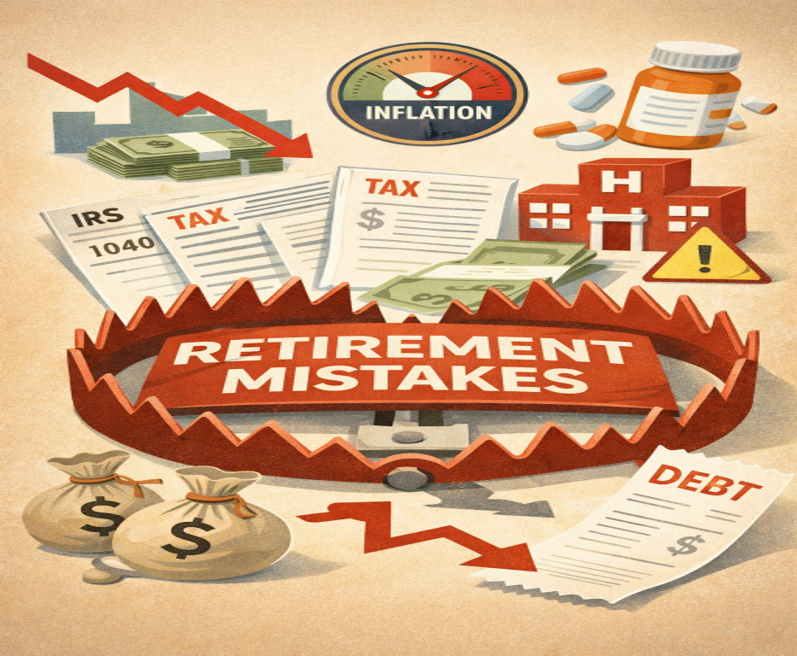
Avoid the Most Common Retirement Mistakes
Avoid Early Withdrawals
Pulling from retirement accounts early doesn’t just reduce your balance it reduces decades of future income. Retirement funds should be treated as protected capital, not emergency money.
Maintain a Separate Emergency Fund
An emergency fund protects your retirement plan from disruption. Liquidity outside retirement accounts prevents:
Forced withdrawals
Market-timed mistakes
Emotional decisions
Address Risk Beyond Investments
True retirement risk management includes:
Health insurance and Medicare planning
Long-term care exposure
Disability and life insurance
Asset protection
Retirement advice must consider life risks, not just market risk.
Optimize Social Security and Income Sources
Social Security is an important piece but not a plan by itself. Timing decisions can significantly affect lifetime benefits. Coordinating Social Security with:
Other income streams
Tax strategy
Longevity expectations
…can dramatically improve outcomes.
Review, Adjust, and Stay in Control
Retirement planning is not “set it and forget it.” Markets change. Laws change. Life changes.
The most successful retirees:
Review their plan annually
Adjust proactively
Focus on control and predictability
Retirement is a transition…not an end. With the right advice and systems in place, it can be one of the most fulfilling chapters of life.
Final Thought
Retirement success isn’t about luck or timing the market. It’s about clarity, control, and structure.
The question isn’t if retirement will happen, the question is whether you’ll enter it with confidence or uncertainty.
Top 10 Retirement Advice Checklist
Use this checklist as a practical guide to help you avoid common retirement mistakes and build a plan that creates clarity, control, and peace of mind.
1. Define Retirement on Your Terms
Retirement is not an age…it’s a financial condition. Clearly define when work becomes optional and what your ideal lifestyle looks like.
2. Plan for a Long Life, Not Just Retirement Day
Many retirement plans fail because they underestimate longevity. Build for 25–35 years of income, healthcare, and inflation.
3. Focus on Income First, Not Just Account Values
Large account balances don’t guarantee a successful retirement. Prioritize predictable, sustainable income over accumulation alone.
4. Separate Emergency Money from Retirement Assets
Your retirement accounts should never be your emergency fund. Liquidity outside of retirement protects your long-term plan from disruption.
5. Eliminate High-Interest Debt Before Retirement
Entering retirement with unnecessary debt increases risk and reduces flexibility. Reducing or restructuring debt improves cash flow and confidence.
6. Understand Taxes Before You Need Income
Taxes can silently erode retirement income. Know which dollars will be taxed, when, and at what rate, then plan accordingly.
7. Coordinate Social Security Strategically
Claiming Social Security is a timing decision, not a default one. Align benefits with longevity, tax planning, and other income sources.
8. Protect Against Life Events, Not Just Market Risk
Market downturns aren’t the only threat. Health events, long-term care needs, disability, and premature death must be planned for.
9. Create Guarantees Where It Makes Sense
Not all retirement income should be exposed to risk. Strategic guarantees can provide stability, confidence, and predictable cash flow.
10. Review and Adjust Annually
A successful retirement plan evolves. Annual reviews help ensure your strategy stays aligned with your goals, income needs, and changing life circumstances.
Bottom Line
Good retirement advice doesn’t rely on hope, timing, or guesswork.
It’s built on intentional decisions, smart systems, and ongoing control.
This article is for general educational purposes only and is not tax, legal, accounting, or investment advice. Strategies depend on individual circumstances and current law. Please review any strategy with your CPA, tax attorney, or other qualified professional before acting. Insurance products are subject to underwriting and carrier terms.