What Happens When the Fed Cuts Rates at Market Highs?
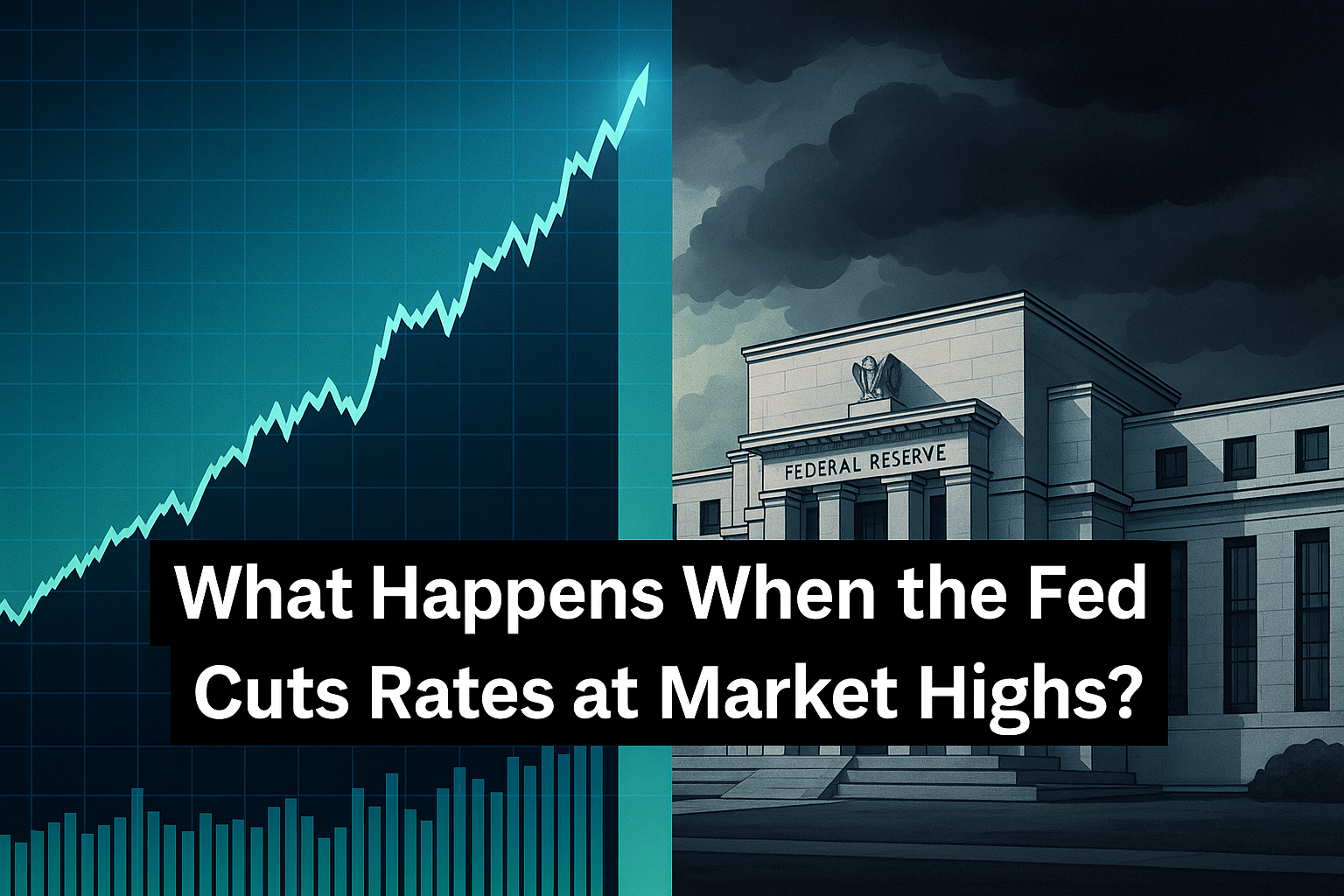
What Happens When the Fed Cuts Rates at Market Highs? Most people hear about Federal Reserve rate cuts and think it’s good news. Lower rates mean cheaper borrowing, more spending, and often a quick lift in the stock market. But here’s the truth: when the Fed cuts rates while the market is at or near all-time highs, it’s not always a sign of strength.
More often, it’s a flashing yellow light that the financial system is under strain.
And that’s where many Americans fall into the trap. They assume the Fed has their back, so they keep playing the bank’s game…piling into debt, following the market hype, and handing over control of their financial future to forces they can’t see. My mission is to help people flip that script. When the Fed makes moves like this, it’s the perfect time to rethink whether you’re on the bank’s plan or on your own Debt-to-Wealth plan.
History Shows the Pattern
1998: Fueling the Dot-Com Bubble
Markets were flying high in the late ’90s. Even as stocks soared, the Fed cut rates to calm global risks from the Asian Financial Crisis. That extra liquidity didn’t fix the problems—it poured gasoline on the dot-com bubble. Two years later, trillions in wealth evaporated.
2001: Cuts Can’t Save Bad Fundamentals
The Fed kept cutting rates as the dot-com bust unfolded. Markets bounced, but those rallies were short-lived. When businesses are overleveraged and valuations detached from reality, cheaper money can’t save them.
2007: The Calm Before the Crash
Markets sat near highs in 2007, but the Fed started cutting rates as the housing bubble cracked. Investors cheered at first, but the crisis that followed became the deepest downturn since the Great Depression.
2019–2020: Short-Term Highs, Sharp Turns
The Fed cut rates in 2019 while stocks were at record levels. The market surged into early 2020… right before COVID sent everything into freefall. When emergency cuts brought rates to zero in March 2020, the market crashed 30% in a month. Yes, stimulus fueled a historic rebound—but only for those positioned to take advantage. Those who carried heavy debt and lived paycheck to paycheck felt the storm full force.
Why This Matters for Everyday Families
When the Fed cuts rates at highs, Wall Street celebrates. But Main Street often misses the message. These cuts usually mean deeper risks are building beneath the surface.
If your money is tied up in endless debt payments, you’re exposed. The bank profits whether the market rallies or crashes because you keep sending them interest. Rate cuts only reinforce the cycle: they get cheaper money, lend it out, and build more profits… while families carry the burden.
This is why I teach the Debt-to-Wealth process. By eliminating the bank’s profit from your life canceling interest, wiping out debt, and redirecting those payments into assets you shift from being the one paying the bank to becoming the one who plays by the bank’s rules. You take the same forces Wall Street uses and apply them to your own household economy.
Investor Takeaways with a Coaching Lens
- Don’t confuse liquidity with safety. A Fed cut at market highs doesn’t mean smooth sailing—it usually signals turbulence ahead.
- Get off the bank’s treadmill. Every extra dollar sent to interest is a dollar you can’t use to build wealth. When markets wobble, those who control their cash flow—not the banks—come out on top.
- Think like the bank. Instead of worrying about the next Fed move, position yourself so you’re always in control of where your dollars go. That’s how you beat the banks at their own game.
The Federal Reserve isn’t in the business of protecting your family’s financial future. Their rate cuts are designed to stabilize the system not to guarantee your security. History proves that cutting rates at market highs often marks a turning point, not a victory lap.
The real question isn’t whether the Fed will cut again. The question is: are you still on the bank’s plan—paying them first, last, and always—or have you started your own plan to cancel interest, convert debt into wealth, and take the bank’s position for yourself? Because no matter what the Fed does, the families who win are the ones who learn how to stop making the banks rich—and start building wealth on their own terms.
This article is for general educational purposes only and is not tax, legal, accounting, or investment advice. Strategies depend on individual circumstances and current law. Please review any strategy with your CPA, tax attorney, or other qualified professional before acting. Insurance products are subject to underwriting and carrier terms.